The work of tinted glasses and contact lenses is to filter certain wavelengths, which makes the noticeable difference between the colours, which otherwise look alike. There are significant differences in the results of people. Patients have documented a dramatic difference in a few cases; in other cases, there is an insignificant change. We can give trial periods prior to purchase so that you can make fair judgments.
Colour Blindness Treatment In Shivaji Nagar
- Home
- Colour Vision Deficiency
Understanding Colour Vision Deficiency – Colour Blindness Specialist In Shivaji Nagar
Most individuals live their years of schooling and employment without knowing that their perception of colour is different than that of all the rest. A child has difficulties with colour-coded worksheets. During a medical job, an adult finds out that he or she is not able to differentiate some signal lights. We provide complete Colour Blindness Treatment in Shivaji Nagar at Raghav Eye Hospital and precise testing, which helps to determine which type and severity of Colour Blindness you have. Colour blindness does not imply seeing the world in black and white. Such a form is extremely rare. The majority of people with the condition do not see the colours; however, they mix up some of the shades, especially the reds with the greens or blues with the yellows.
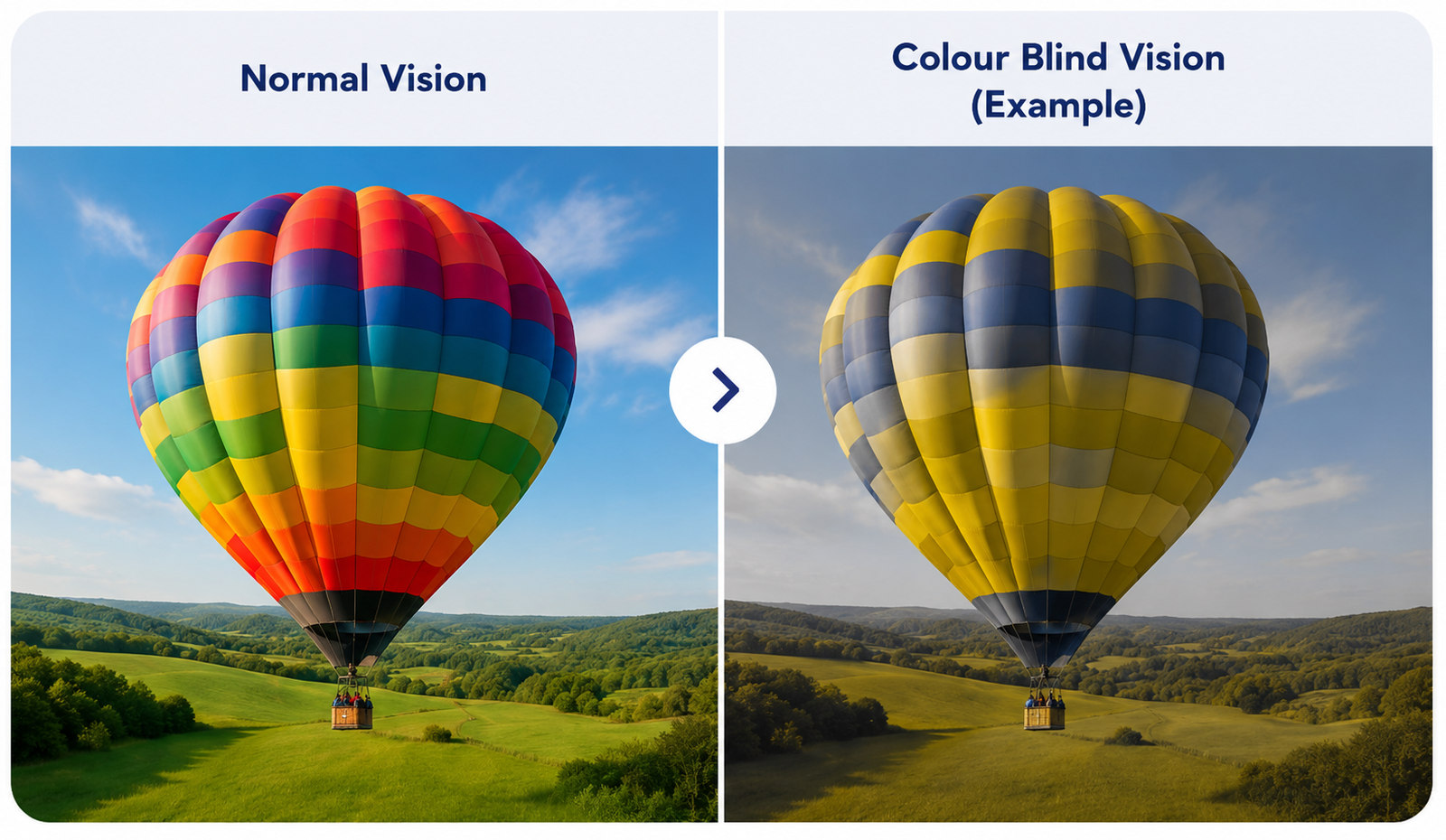
Colour Blindness At Raghav Eye Hospital

The difference is illustrious. Inherited colour blindness is stable and doesn’t worsen. Created deficiency frequently indicates a pre-existing eye or neurological disorder that must be treated itself.
What Causes Colour Blindness
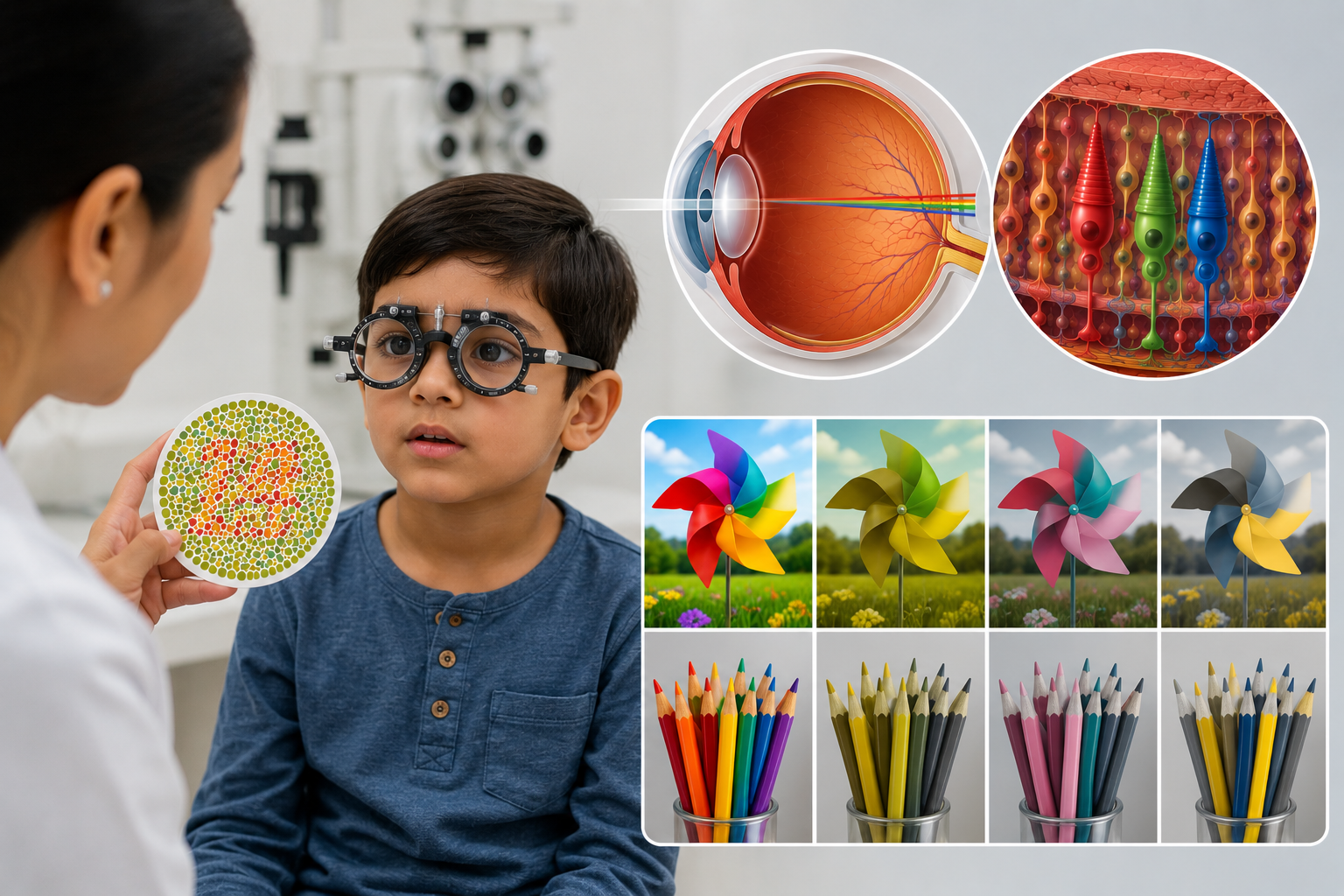
There are two kinds of light-sensitive cells in your retina: the rod cells that assist in low-light vision, and the cone cells that assist in colour. Three types of cones exist, which react to different wavelengths – red, green, and blue. All three should be functional and effective and communicate well with the brain to ensure colour vision.
The absence or abnormal functioning of one of the types of cones alters the perception of colour. The brain continues to process what is received, but some of the distinctions are no longer possible.
The acquired colour vision deficiency develops later in life as a result of some other cause. This involves cataracts, glaucoma, diabetic retinopathy, optic nerve injury, macular degeneration, and some drugs like hydroxychloroquine or ethambutol. Colour perception may also be affected by head injuries and long-term alcohol consumption.
The overwhelming number of cases is attributed to inherited colour blindness. It is inherited on the X chromosome, and that is why it affects between 1 in 12 men but only 1 in 200 women. Men carry one X chromosome, and hence a defect in one gene causes the condition. Both X chromosomes are
required by women.
Treatment and Management Options for Colour Blindness Diagnosis In Shivaji Nagar
The inherited colour blindness is incurable at the moment. Gene therapy is a research that has potential in animals but has not been applied clinically yet. We can only provide useful management tools that make a positive contribution to everyday operation.
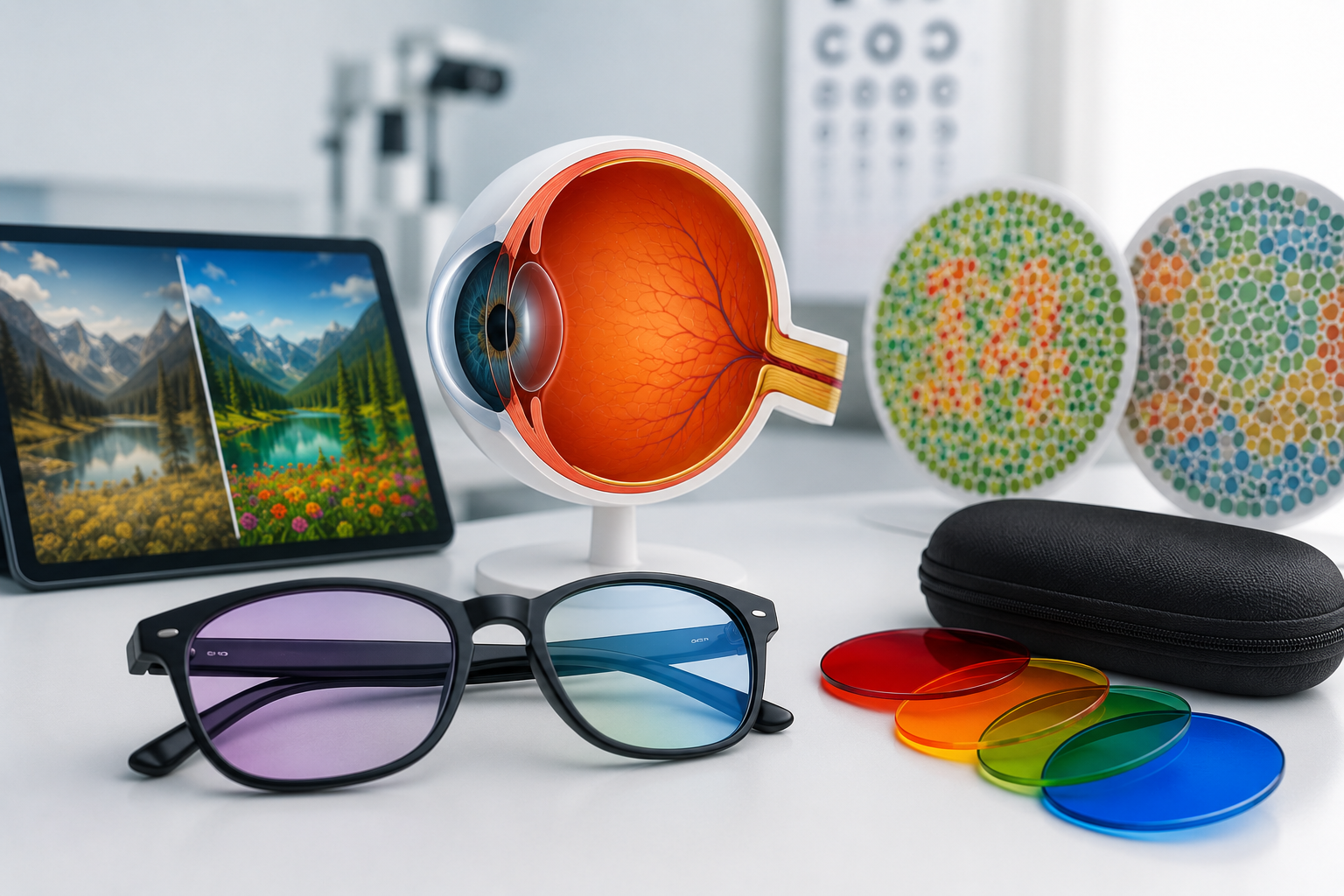
Colour-Correcting Lenses
Occupational Colour Vision Standards
Note that these lenses don’t restore normal colour vision. They accentuate discrimination amongst contrasting shades. Their vision is also not up to occupational colour vision standards in aviation, rail, or on the sea.
Single-Eye Filter Approach
Using a tinted lens in one eye alone is only capable of enhancing some discrimination activities, but it influences depth perception. Wearable only to perform particular functions.
Treating Acquired Deficiency
In cases of colour vision loss due to cataracts, diabetic retinopathy, glaucoma, or the effects of medications, treatment of the underlying condition usually restores or enhances colour perception. Surgery in the form of cataract surgery can show some improvement.
The Procedure: What to Expect
Prior to Treatment – Come in with a clean face, without makeup. One more time, we will discuss your goals and mark injection points. You may ask a mirror to grant placement prior to our doing so.
During Treatment
This is a very fast and painless procedure. Each time, you will get a small pinch. The majority of individuals do not consider the pain to be more than a mosquito bite. The whole procedure lasts 15-20 minutes.
Post-Treatment
You may resume normal activities. We suggest that the injection sites should not be rubbed for 24 hours. Other patients have mild redness or tiny bumps that fade away in hours.
Results Timeline
You should start to notice softening in 3-5 days. The entire results are realized after two weeks as the Botox begins to work fully. The outcomes take 3-4 months, after which you may opt to continue your fresh look using touch-ups.
Colour Vision Deficiency types
Individuals who have red-green deficiency normally mix reds and browns, greens and beige, and fail to differentiate purple and blue.
Red-Green Deficiency
The most common type by far. Protanomaly and protanopia consist of less or no functionality of the red cones, and cause the reds to appear darker and of a lower quality. Green cones are also affected by deuteranomaly and deuteranopia- deuteranomaly alone covers approximately five percent of men.
Blue-Yellow Deficiency
Tritanomaly and tritanopia are diseases that influence blue cones. Much rarer than red-green types and affects men and women equally. Blues are greener, and yellows may seem pink or grey.
Complete Colour Blindness
No functional colour vision = achromatopsia. It is quite uncommon and is normally accompanied by sensitivity to light, loss of visual acuity, and involuntary movement of the eyes. The kind and the extent are decided by our Colour Blindness Specialist in Shivaji Nagar, as there is a wide range of severity even within the same group.
Advanced Technology & Infrastructure
Raghav Eye Hospital has the latest medical technology. The retina is examined in high definition using our OCT machines, which give a detailed cross-sectional view of the retina and identify subtle changes in the retina structure that may not be detected with traditional exams. We have progressed to vitreoretinal surgical microscopes that have better visualization ability. This enables our surgeons to carry out complex operations in an extremely precise and safe manner.
Our facility includes:
The most recent generation of laser systems treats the retina in a precise manner.
Laboratory: Well-equipped lab to conduct pre-operative examinations.
Good pharmacy with necessary drugs and injections.
State-of-the-art, comfortable recovery facilities.
Continuity Digital imaging and medical record systems.
Such a combination of hardware and skills will bring you international-quality retinal services in your own town.
How We Test Colour Vision
A single screening test is not adequate to make an accurate diagnosis. The assessment protocol we have comprises a number of supporting techniques
01
The most commonly recognised screening tool is the Ishihara Plates. You see a set of plates of coloured dots in the form of numbers or lines. Individuals with normal colour vision perceive one image; those with a deficiency of red-green colour vision perceive another image or none at all. Good at screening, but does not measure the severity accurately.
02
The Farnsworth D-15 and the Farnsworth-Munsell 100 Hue Test involve placing coloured caps sequentially in terms of hue. These indicate the nature of the deficiency and its severity, and are useful in occupational tests.
03
The Cambridge Colour Test is a computerised test of colour discrimination thresholds that is highly precise. Applicable in identifying slight acquired deficiencies.
04
The reference standard is Anomaloscope Testing. It involves comparison of a mixed red-green light to a yellow reference and provides a definite classification of the type of red-green deficiency.
05
We do a combination of testing and a complete eye examination, including a retinal examination, optic nerve evaluation, and visual field testing where necessary. This makes sure that the acquired causes are not overlooked. Our practice on Colour Blindness Diagnosis in Shivaji Nagar always involves eliminating the underlying disease that can be treated.
Colour Blindness In Children
Timely identification is an actual difference in learning results. When young children are unable to perform tasks that require the use of colour, they are commonly labelled as being inattentive or slow, despite having an undiagnosed colour vision deficiency.
We suggest the test between the ages of four and five, when formal schooling is not taken seriously. Screening is fast, painless, and it involves child-friendly versions of the standard tests that involve shapes instead of numbers.
Upon diagnosis, we give documentation to schools to enable teachers to make changes whenever necessary. We also advise families on career considerations, as some professions entail requirements of colour vision.
Adaptive Strategies
To a majority of patients, practical adaptation is more important than optical aids:
- Applications on smartphones that determine colours using the camera.
- Organising and labelling clothing with written tags
- Acquiring positional information - order of the traffic lights, not colour.
- Ask the work or school to use accessible colour schemes.
- Application of pattern and texture, as well as colour, in charts and materials.
Career and Practical Implications
A number of professions require normal colour vision, such as commercial aviation, air traffic control, operating a train, maritime navigation, some electrical occupations, and some military and police jobs.
Being aware of your condition early will enable you to plan your career knowledgeably and not be disappointed by a pre-employment medical checkup. We offer official records of test results where needed, either in applications or workplace accommodations requests.
The majority of occupations are not affected at all. Colour vision deficiency is a variation in perception, which is not a disability in most places.
Frequently Asked Questions
Is there a cure for colour blindness?
There is no treatment for inherited colour blindness at the moment. Deficiencies that are acquired usually get better as the cause of that deficiency is treated.
Are colour-correcting glasses really effective?
They enhance discrimination in confusing colours to individuals, but do not give them normal colour vision. Response varies individually.
What is the age at which children should be tested?
Four to five years before learning based on colour takes centre stage in schooling.
Is there any sudden colour blindness in adults?
Yes, and an acute onset must be promptly investigated. It can be a sign of optic nerve, retinal, or neurological issues
Is colour blindness increasing with time?
Inherited ones are not affected by life. The acquired forms can progress in cases where the underlying condition is not managed.
EXCELLENTTrustindex verifies that the original source of the review is Google. The team here is exceptionally professional and uses the latest technology for a precise exam. The doctor explained everything clearly, making me feel completely confident in my care. I highly recommend this clinic for anyone seeking top-tier eye health services."Posted on GoogleTrustindex verifies that the original source of the review is Google. Good hospital, my eye surgery secessfuully done.Posted on GoogleTrustindex verifies that the original source of the review is Google. Nice carePosted on GoogleTrustindex verifies that the original source of the review is Google. Nice experiencePosted on GoogleTrustindex verifies that the original source of the review is Google. Very good servicePosted on GoogleTrustindex verifies that the original source of the review is Google. Good ServicePosted on GoogleTrustindex verifies that the original source of the review is Google. It was nice experience with the doctor. All our queries were answered. I will recommend the doctor to othersPosted on GoogleTrustindex verifies that the original source of the review is Google. Dr. Sarika Sethia and her entire staff are extremely understanding and compassionate. They make sincere efforts to ease patients’ personal fears and provide the best possible treatment, ensuring complete satisfaction. The service and hospitality at Raghav Eye Hospital are truly excellent—I wholeheartedly appreciate it. My heartfelt thanks to Dr. Sarika and her entire team, along with best wishes for their continued success in the future.