

Diabetic Retinopathy Treatment in JM Road
- Home
- Diabetic Retinopathy Treatment
Diabetic Retinopathy Treatment in JM Road
Most people who’ve had diabetes for a few years have heard the same line from their physician at some point “get your eyes checked too.” And honestly, a lot of them nod, mean to do it, and then just.. don’t. Life gets busy, the eyes feel fine, so it slips down the priority list. The problem is, diabetic retinopathy doesn’t usually give you a warning before it starts affecting your vision. It works quietly, in the background, and by the time you notice something’s off, it’s often already progressed further than it should have.
We see this a lot at Raghav Eye Hospital. A patient walks in almost reluctantly, dragged along by a spouse or a child who insisted, and it’s not unusual for us to find changes in the retina that the person had no idea were even there. That’s really the whole point behind Diabetic Retinopathy Treatment in JM Road at our clinic catching things early, before they turn into something harder to manage

Diabetic Retinopathy At Raghav Eye Hospital
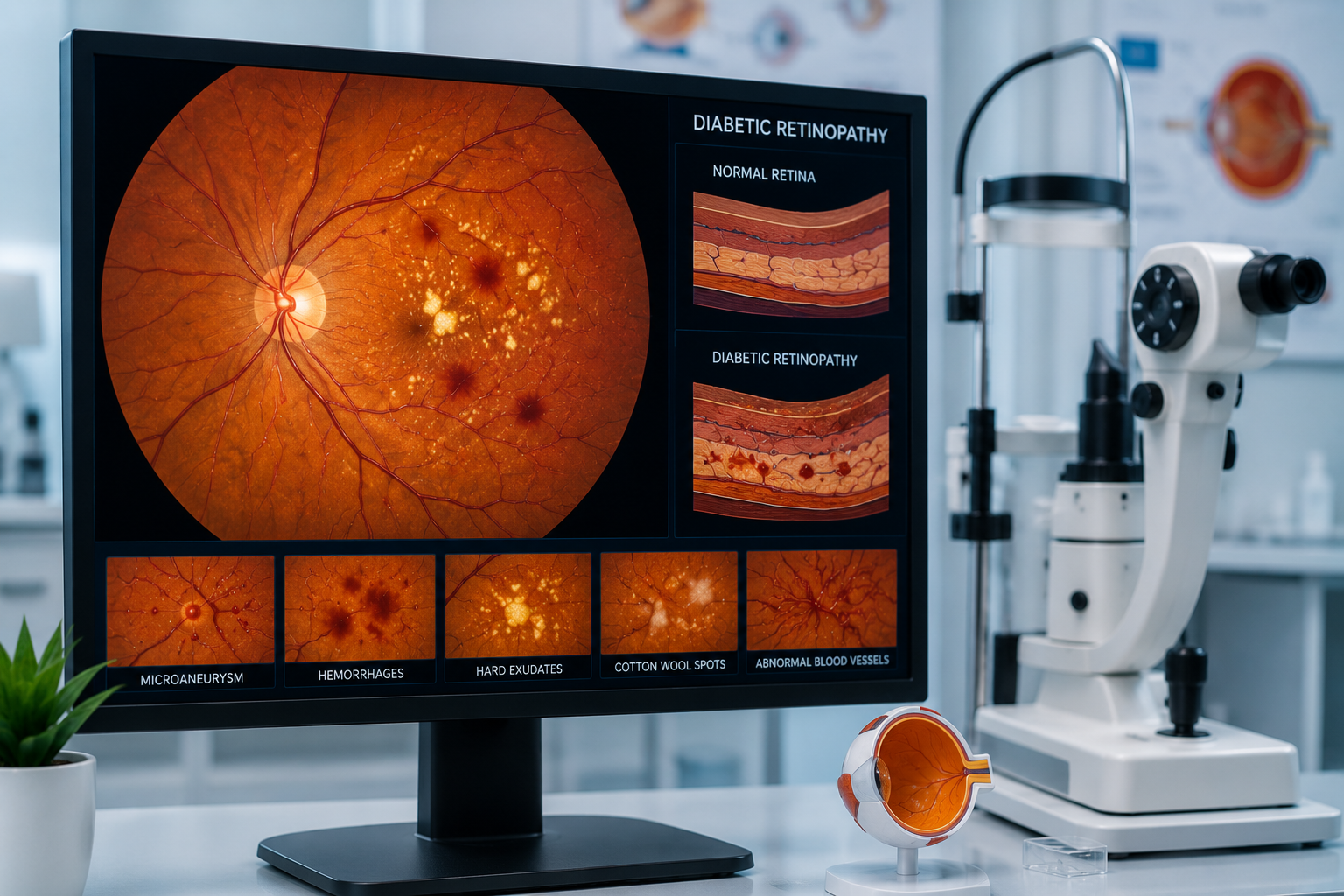
What's Really Happening Inside the Eye
In simple terms, diabetic retinopathy is what happens when years of elevated blood sugar start wearing down the tiny blood vessels feeding the retina, the layer at the back of the eye that actually processes what you see. These vessels can start leaking, swelling up, or in some cases, closing off entirely. And when the eye senses that blood flow is restricted, it tries to fix things on its own by growing new vessels. Sounds helpful, except these new vessels are weak and bleed easily, which usually makes the situation worse instead of better.
Here’s the part that catches most people off guard: the early stage, known as non-proliferative retinopathy, rarely comes with pain or any real drop in vision. Some patients tell us their eyesight felt “completely normal” right up until a scan showed otherwise. So by the time you’re actually noticing blurred patches or trouble seeing at night, there’s a good chance the condition has already moved past the early phase.
Unmatched Accuracy
Computer algorithms scan the anatomy of your eye in 3D, giving you the accuracy of every incision being precisely where it is required.
Minimal Tissue Damage
Laser is microscopically precise, which minimizes the trauma to the surrounding tissues.
Quicker Recovery
Slit incisions of a smaller size cause a faster recovery and earlier return to vision.
Improved Visual Results
Laser-assisted surgery has been associated with improved visual results as reported by many patients.
Less Astigmatism
The technology has the capability of correcting already existing astigmatism in the same procedure.
Why People Come to Us Specifically for This
Plenty of clinics do general eye exams. Managing something tied directly to diabetes, though, needs a bit more than a standard check-up. We don’t just glance at the retina and call it a day — we look at how long you’ve had diabetes, how your sugar control has been over the past year or so, and whether things like blood pressure or kidney function are also playing a role, because they usually do.
What sets Diabetic Retinopathy Treatment in JM Road at Raghav Eye Hospital apart is that we actually have the equipment to back up what we’re saying OCT scans, fundus imaging, angiography when needed. We’re not telling you “it looks fine” based on a quick look.
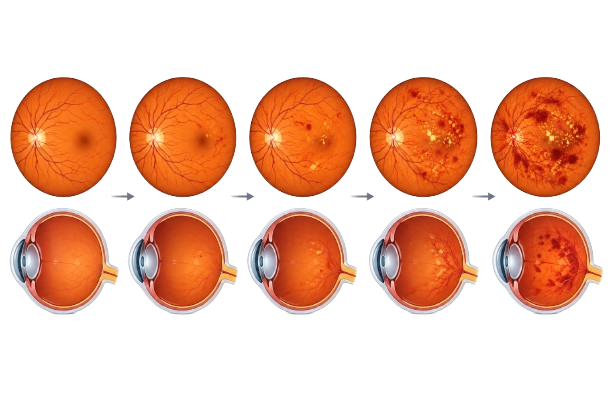
How Diagnosis and Treatment Actually Work Here
01
Your first visit will almost always involve dilating the pupils so we can get a proper look at the retina — a bit blurry for an hour or two afterward, but worth it. From there, the path forward really depends on what we find.
02
Sometimes, especially in early cases, the answer isn’t a procedure at all. It’s tightening up blood sugar control and coming back for monitoring every few months. When there’s swelling affecting central vision, anti-VEGF injections tend to be the first step.
03
Laser treatment is another route we take fairly often, mainly to seal off leaking vessels or stop abnormal ones before they rupture. It won’t bring back vision that’s already gone, but it’s genuinely effective at slowing things down and preventing the next stage from happening.
04
Our team has done this often enough that it’s become fairly routine for us, even if it’s a big deal for the patient going through it for the first time.
Risk Factors and Prevention
The Doctor You'll Actually Be Talking To
A good number of patients admit they Googled their symptoms before coming in, and let’s just say the internet doesn’t exactly do a great job of keeping people calm. Our Diabetic Retinopathy Doctor in JM Road spends real time in that first consultation just explaining, in plain words, what’s actually going on not in a rushed five-minute version, but enough that you leave understanding your own eyes better than when you walked in.
Patients who understand what’s happening tend to show up for their follow-ups, tend to take their sugar levels more seriously, and honestly, tend to do better in the long run.
What Your Visit Here Looks Like
- A thorough retinal exam with dilated pupils
- OCT imaging for a precise, detailed diagnosis
- A treatment approach built around your specific stage of the condition
- Regular follow-ups, since this is rarely a one-time fix
- Working alongside your diabetologist when your sugar control needs attention too
- A clinic that's genuinely easy to get to, right on JM Road
Frequently Asked Questions
How often should someone with diabetes get an eye check?
Once a year is the general rule if there’s no existing damage, though it can be more frequent depending on how well-controlled your sugar levels have been.
Is there a permanent cure for diabetic retinopathy?
Not a cure exactly, but it can be managed very effectively, especially when it’s caught in the earlier stages before real damage sets in.
Does the treatment hurt?
The injections involve a brief, mildly uncomfortable moment at most. Laser treatment is generally painless and done with local anaesthesia. Neither one keeps you out of action for long.
Will my eyesight go back to how it was?
That depends heavily on how far the condition had progressed before treatment started. Mostly, the goal is preventing further loss rather than reversing what’s already happened.
How many injections does treatment usually involve?
It varies from person to person, but a common starting point is around three to six injections spaced a few weeks apart, followed by monitoring visits after that.
EXCELLENTTrustindex verifies that the original source of the review is Google. The team here is exceptionally professional and uses the latest technology for a precise exam. The doctor explained everything clearly, making me feel completely confident in my care. I highly recommend this clinic for anyone seeking top-tier eye health services."Posted on GoogleTrustindex verifies that the original source of the review is Google. Good hospital, my eye surgery secessfuully done.Posted on GoogleTrustindex verifies that the original source of the review is Google. Nice carePosted on GoogleTrustindex verifies that the original source of the review is Google. Nice experiencePosted on GoogleTrustindex verifies that the original source of the review is Google. Very good servicePosted on GoogleTrustindex verifies that the original source of the review is Google. Good ServicePosted on GoogleTrustindex verifies that the original source of the review is Google. It was nice experience with the doctor. All our queries were answered. I will recommend the doctor to othersPosted on GoogleTrustindex verifies that the original source of the review is Google. Dr. Sarika Sethia and her entire staff are extremely understanding and compassionate. They make sincere efforts to ease patients’ personal fears and provide the best possible treatment, ensuring complete satisfaction. The service and hospitality at Raghav Eye Hospital are truly excellent—I wholeheartedly appreciate it. My heartfelt thanks to Dr. Sarika and her entire team, along with best wishes for their continued success in the future.