

Diabetic RetInopathy Treatment In Deccan
- Home
- Diabetic Retinopathy Treatment
Best Diabetic RetInopathy Specialist In Deccan - Protecting Your Vision Before It's Too Late
If you’ve been living with diabetes for a while, you’ve probably heard “get your eyes checked” from your doctor more times than you can count and maybe brushed it off once or twice because, honestly, your eyes felt completely fine. That’s exactly the problem with diabetic retinopathy. It doesn’t wait for symptoms before it starts causing damage. By the time you actually notice something’s off, it’s often been quietly progressing for years already. If you’re here searching for diabetic retinopathy treatment in Deccan, you’ve already taken the hardest step choosing to check instead of just assuming everything’s okay.

Diabetic Retinopathy At Raghav Eye Hospital
We meet diabetic patients every week who genuinely had no idea their eyes were at risk until a routine screening caught early changes. And that’s actually the good news hiding in all of this caught early, diabetic retinopathy is very manageable. Caught late, it becomes one of the leading causes of preventable blindness in adults. The difference between those two paths usually comes down to one simple thing: whether someone got screened on time.
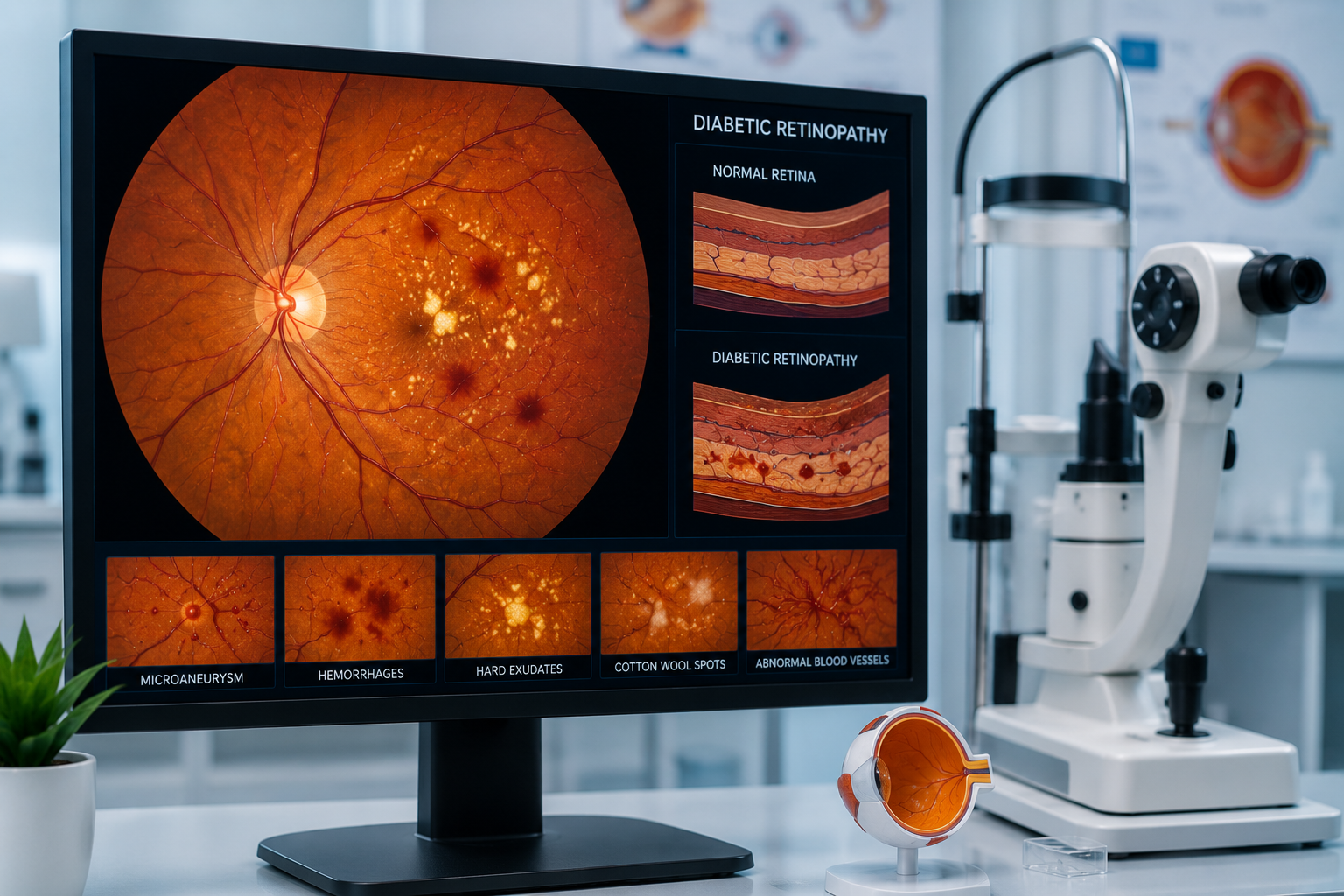
What's Actually Going On With Your Eyes
In plain terms, diabetic retinopathy happens when consistently high blood sugar damages the tiny blood vessels feeding your retina, the part of your eye that actually captures what you see. Over time, these vessels can leak, swell, close off, or trigger fragile new vessel growth that bleeds easily. None of this happens overnight, which is exactly why it’s so easy to ignore until real vision changes show up.
The tricky part? In its early stages, diabetic retinopathy usually causes zero symptoms. Your vision can feel perfectly normal while damage is quietly happening behind the scenes. That’s precisely why regular screening with a diabetic retinopathy doctor in Deccan matters so much for anyone living with diabetes, no matter how “fine” your eyes feel today.
Treatment Options We Offer
Treatment depends heavily on how advanced things are at diagnosis, which is exactly why catching this early gives you far more options.
Blood sugar and overall health management
sounds obvious, but it's genuinely the foundation here. Keeping sugar, blood pressure, and cholesterol well-controlled slows progression significantly, even in patients with some existing retinal damage.
Anti-VEGF injections
help patients with macular swelling or abnormal vessel growth by blocking the protein driving it, reducing swelling and stabilising or even improving vision. These are usually given as a series over several months.
Laser treatment (photocoagulation)
targets leaking or abnormal vessels directly, sealing them off to stop further bleeding or fluid leakage, a well-established approach used successfully for decades.
Vitrectomy surgery
becomes necessary in more advanced cases, particularly with significant bleeding or scar tissue pulling on the retina, clearing the way for it to function properly again.
Every plan we build is based on exactly where your eyes stand, not a generic template — two patients with the same diagnosis can genuinely need very different treatment paths.
Why Screening Matters More Than People Think
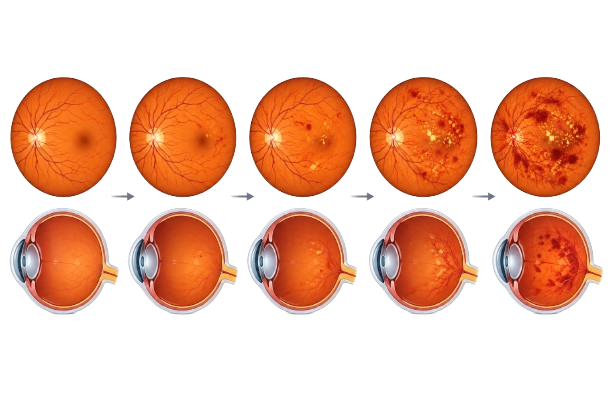
Here’s the honest truth: most patients with diabetic retinopathy have no clue anything’s wrong until a screening picks it up. That’s not carelessness on their part; it’s just how quietly this condition behaves. It moves stage by stage, silently, and by the time blurred vision or dark spots appear, treatment options can already be more limited.
This is why doctors keep pushing for an annual retina screening for every diabetic patient, even those with perfectly controlled sugar levels. Duration of diabetes matters just as much as control does the longer you’ve lived with it, the more these yearly checks matter, regardless of how well your numbers look on paper.
How We Actually Diagnose It
A proper diagnosis takes more than a basic vision test. When patients come to us for diabetic retinopathy treatment in Deccan, we usually run through:
01
Dilated retinal examination
giving specialists a clear, detailed view of the retina checking for bleeding, swelling, or unusual vessel growth.
02
OCT (Optical Coherence Tomography)
a precise, layer-by-layer scan that often reveals swelling or fluid buildup long before it would show up on a regular exam.
03
Fundus fluorescein angiography
using a special dye and camera to map blood flow and pinpoint exactly where vessels are leaking or blocked.
04
Fundus photography
creating a detailed image record of your retina, useful for tracking changes across future visits.
We always take time to explain what these scans actually show, because understanding your own condition genuinely makes it easier to stay committed to treatment.
Why Patients Choose Us as Their Diabetic RetInopathy Doctor In Deccan
Managing a chronic condition like this isn’t a one-time visit, it’s an ongoing relationship between you and your doctor. As the best diabetic retinopathy specialist in Deccan that many patients keep returning to year after year, our focus stays on consistent monitoring, not just your chart.
What patients tell us matters most isn’t just the equipment, though that helps too; it’s that we don’t rush appointments, we explain findings in language you actually understand, and we stay involved through every follow-up, not just the first diagnosis.
Symptoms You Really Shouldn't Sit On
By the time noticeable symptoms show up, the condition is often already more advanced. Still, keep an eye out for:
- Blurry or fluctuating vision that changes through the day
- Dark spots or floaters drifting across what you see
- Patches or streaks that seem to block part of your sight
- Trouble seeing clearly at night
- Colours looking washed out or duller than usual
- Sudden vision loss in one eye this needs urgent attention
If any of this sounds familiar, especially sudden vision loss or a jump in floaters, don’t wait for your next scheduled diabetes check-up. Come get your eyes examined directly instead.
Why Screening Matters More Than People Think
Here’s the honest truth: most patients with diabetic retinopathy have no clue anything’s wrong until a screening picks it up. That’s not carelessness on their part; it’s just how quietly this condition behaves. It moves stage by stage, silently, and by the time blurred vision or dark spots appear, treatment options can already be more limited.
This is why doctors keep pushing for an annual retina screening for every diabetic patient, even those with perfectly controlled sugar levels. Duration of diabetes matters just as much as control does the longer you’ve lived with it, the more these yearly checks matter, regardless of how well your numbers look on paper.
Living Well With It
A diabetic retinopathy diagnosis isn’t a countdown to blindness, even though it can feel that way at first. With early detection, consistent treatment, and proper diabetes management, most patients keep functional vision for life.
Frequently Asked Questions
How often should diabetics get their eyes screened?
Generally once a year, though more often if retinopathy’s already been detected or blood sugar control has been inconsistent.
Can diabetic retinopathy be reversed?
Early changes can sometimes be slowed or stabilised with good sugar control, but existing damage generally isn’t fully reversible which is exactly why catching it early matters so much.
Is treatment painful?
Most procedures, including injections and laser treatment, use local anaesthesia or numbing drops, keeping discomfort minimal.
How long does anti-VEGF treatment usually take?
Typically a series of injections spaced several weeks apart, with duration depending on how your eyes respond.
EXCELLENTTrustindex verifies that the original source of the review is Google. The team here is exceptionally professional and uses the latest technology for a precise exam. The doctor explained everything clearly, making me feel completely confident in my care. I highly recommend this clinic for anyone seeking top-tier eye health services."Posted on GoogleTrustindex verifies that the original source of the review is Google. Good hospital, my eye surgery secessfuully done.Posted on GoogleTrustindex verifies that the original source of the review is Google. Nice carePosted on GoogleTrustindex verifies that the original source of the review is Google. Nice experiencePosted on GoogleTrustindex verifies that the original source of the review is Google. Very good servicePosted on GoogleTrustindex verifies that the original source of the review is Google. Good ServicePosted on GoogleTrustindex verifies that the original source of the review is Google. It was nice experience with the doctor. All our queries were answered. I will recommend the doctor to othersPosted on GoogleTrustindex verifies that the original source of the review is Google. Dr. Sarika Sethia and her entire staff are extremely understanding and compassionate. They make sincere efforts to ease patients’ personal fears and provide the best possible treatment, ensuring complete satisfaction. The service and hospitality at Raghav Eye Hospital are truly excellent—I wholeheartedly appreciate it. My heartfelt thanks to Dr. Sarika and her entire team, along with best wishes for their continued success in the future.